This website has been archived and is no longer maintained.
This website has been archived and is no longer maintained. Older content or site functionality may not be accessible or functional in newer browsers. If you require accessible documents, please contact the Department of Plant Sciences for further information.
Led by
Mumina Shibia, Kenya Agricultural and Livestock Research Organization (KALRO)
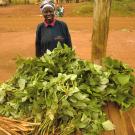
A project focused on improving the livelihoods of small-scale producer farmers through increasing productivity, reducing postharvest losses, and enhancing market access to African indigenous vegetables (AIVs).
Led by
Rolando Cifuentes, Universidad del Valle de Guatemala (UVG)
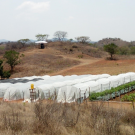
For highland farmers who face elevated risks due to weather change, this project identifies the most effective protective structures, irrigation technologies, practices to improve soil health, and postharvest management practices to ensure the production of high-quality, safe, and nutritious produce.
Focused on improving the income and livelihoods of local producers, this project identifies protective structures that maximize horticultural production and quality, and enhancements for access to postharvest technology and market linkages.
Focused on improving the income and livelihoods of local producers, this project identifies protective structures that maximize horticultural production and quality, and enhancements for access to postharvest technology and market linkages.
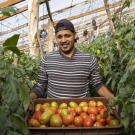
With emphasis on the promotion of youth-led enterprises, this project raises consumer awareness of the nutritional benefits of African indigenous fruits and vegetables (AIFVs), while increasing incomes for all actors along the value chain.
With emphasis on the promotion of youth-led enterprises, this project raises consumer awareness of the nutritional benefits of African indigenous fruits and vegetables (AIFVs), while increasing incomes for all actors along the value chain.
Through identification of practices to reduce pre- and post-harvest losses, along with effective marketing and market access strategies of vegetables, this project will improve household nutrition, increase sales, and elevate the household income status small-scale vegetable producers.
Led by
Kwadwo Danso-Mensah, International Center for Evaluation and Development , University of Ghana
Focused on a successful transition for small-scale producers in their shift from staple to horticulture production, this project examines the trade-offs across nutritious diet, income, land use and time availability, for small-scale producers in Kenya.
To improve food system outcomes, such as accessible and affordable healthy diets, this project explores the role of mid-stream actors in alleviating value chain challenges that impact the affordability and availability of healthy and safe foods for urban consumers.
To improve food system outcomes, such as accessible and affordable healthy diets, this project explores the role of mid-stream actors in alleviating value chain challenges that impact the affordability and availability of healthy and safe foods for urban consumers.
Led by
Gurbinder S. Gill, Agribusiness Associates Inc.
In 2014, the Rwandan National Horticulture Strategy estimates that 1 million rural households in Rwanda grow horticultural commodities, "principally for home use and sale.
Led by
Gurbinder S. Gill, Agribusiness Associates Inc.
In 2014, the Rwandan National Horticulture Strategy estimates that 1 million rural households in Rwanda grow horticultural commodities, "principally for home use and sale.
Led by
Gurbinder S. Gill, Agribusiness Associates Inc.
In 2014, the Rwandan National Horticulture Strategy estimates that 1 million rural households in Rwanda grow horticultural commodities, "principally for home use and sale.
Led by
Diane Barrett, University of California, Davis
A year of training for postharvest experts from Tanzania, Rwanda, Kenya, Ghana, Benin and Gabon culminates in the establishment of a model Postharvest and Training Services Center in Tanzania--which the new experts emulate in their home countries.
Led by
Diane Barrett, University of California, Davis
A year of training for postharvest experts from Tanzania, Rwanda, Kenya, Ghana, Benin and Gabon culminates in the establishment of a model Postharvest and Training Services Center in Tanzania--which the new experts emulate in their home countries.
Led by
Diane Barrett, University of California, Davis
A year of training for postharvest experts from Tanzania, Rwanda, Kenya, Ghana, Benin and Gabon culminates in the establishment of a model Postharvest and Training Services Center in Tanzania--which the new experts emulate in their home countries.
Led by
Diane Barrett, University of California, Davis
A year of training for postharvest experts from Tanzania, Rwanda, Kenya, Ghana, Benin and Gabon culminates in the establishment of a model Postharvest and Training Services Center in Tanzania--which the new experts emulate in their home countries.
Led by
Diane Barrett, University of California, Davis
A year of training for postharvest experts from Tanzania, Rwanda, Kenya, Ghana, Benin and Gabon culminates in the establishment of a model Postharvest and Training Services Center in Tanzania--which the new experts emulate in their home countries.
Led by
Diane Barrett, University of California, Davis
A year of training for postharvest experts from Tanzania, Rwanda, Kenya, Ghana, Benin and Gabon culminates in the establishment of a model Postharvest and Training Services Center in Tanzania--which the new experts emulate in their home countries.
Postharvest losses of fresh horticultural crops are a major challenge in Tanzania, with studies from Sokoine University of Agriculture estimating losses of fresh produce at 44-60 percent.
Postharvest losses of fresh horticultural crops are a major challenge in Tanzania, with studies from Sokoine University of Agriculture estimating losses of fresh produce at 44-60 percent.
Postharvest losses of fresh horticultural crops are a major challenge in Tanzania, with studies from Sokoine University of Agriculture estimating losses of fresh produce at 44-60 percent.
This project's goal is to introduce novel technologies that will improve production practices and reduce postharvest losses in Guinea. These technologies will be delivered through a market-driven and youth-led Horticulture Training and Services Center in Kindia, Guinea.
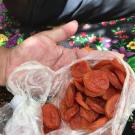
Apricots have the potential to be a high-value crop for smallholder farmers in Tajikistan as the climate, soil, and water in many parts of the country are favorable for apricot production.
Bell pepper production in Central America and the Caribbean has become one of the main agricultural commodities for export to the United States and the European Union.
Costa Rica, Honduras, Nicaragua, Dominican Republic, Haiti
Bell pepper production in Central America and the Caribbean has become one of the main agricultural commodities for export to the United States and the European Union.
Costa Rica, Honduras, Nicaragua, Dominican Republic, Haiti
Bell pepper production in Central America and the Caribbean has become one of the main agricultural commodities for export to the United States and the European Union.
Costa Rica, Honduras, Nicaragua, Dominican Republic, Haiti
Bell pepper production in Central America and the Caribbean has become one of the main agricultural commodities for export to the United States and the European Union.
Costa Rica, Honduras, Nicaragua, Dominican Republic, Haiti
Bell pepper production in Central America and the Caribbean has become one of the main agricultural commodities for export to the United States and the European Union.
Costa Rica, Honduras, Nicaragua, Dominican Republic, Haiti
Knowledge of postharvest handling practices necessary to satisfy market requirements limits the success of small-scale producers of horticultural crops to participate in the value chain at various
Led by
Diane Barrett, University of California, Davis
Women carry out most production of horticultural crops in Tanzania and other developing countries. Harvest periods are short but less than 1% of the crop is processed for off-season consumption.
Led by
Robert Paull, University of Hawai’i at Mānoa
This project brings together two parallel research programs for collaboration — one in Sri Lanka using natural coating and herbal extracts and another in Hawaii to use natural epiphytic microo
Led by
Mumina Shibia, Kenya Agricultural and Livestock Research Organization (KALRO)
A project focused on improving the livelihoods of small-scale producer farmers through increasing productivity, reducing postharvest losses, and enhancing market access to African indigenous vegetables (AIVs).
Led by
Rolando Cifuentes, Universidad del Valle de Guatemala (UVG)
For highland farmers who face elevated risks due to weather change, this project identifies the most effective protective structures, irrigation technologies, practices to improve soil health, and postharvest management practices to ensure the production of high-quality, safe, and nutritious produce.
Focused on improving the income and livelihoods of local producers, this project identifies protective structures that maximize horticultural production and quality, and enhancements for access to postharvest technology and market linkages.
With emphasis on the promotion of youth-led enterprises, this project raises consumer awareness of the nutritional benefits of African indigenous fruits and vegetables (AIFVs), while increasing incomes for all actors along the value chain.
Through identification of practices to reduce pre- and post-harvest losses, along with effective marketing and market access strategies of vegetables, this project will improve household nutrition, increase sales, and elevate the household income status small-scale vegetable producers.
Led by
Kwadwo Danso-Mensah, International Center for Evaluation and Development , University of Ghana
Focused on a successful transition for small-scale producers in their shift from staple to horticulture production, this project examines the trade-offs across nutritious diet, income, land use and time availability, for small-scale producers in Kenya.
To improve food system outcomes, such as accessible and affordable healthy diets, this project explores the role of mid-stream actors in alleviating value chain challenges that impact the affordability and availability of healthy and safe foods for urban consumers.
Led by
Gurbinder S. Gill, Agribusiness Associates Inc.
In 2014, the Rwandan National Horticulture Strategy estimates that 1 million rural households in Rwanda grow horticultural commodities, "principally for home use and sale.
Led by
Diane Barrett, University of California, Davis
A year of training for postharvest experts from Tanzania, Rwanda, Kenya, Ghana, Benin and Gabon culminates in the establishment of a model Postharvest and Training Services Center in Tanzania--which the new experts emulate in their home countries.
Postharvest losses of fresh horticultural crops are a major challenge in Tanzania, with studies from Sokoine University of Agriculture estimating losses of fresh produce at 44-60 percent.
This project's goal is to introduce novel technologies that will improve production practices and reduce postharvest losses in Guinea. These technologies will be delivered through a market-driven and youth-led Horticulture Training and Services Center in Kindia, Guinea.
Apricots have the potential to be a high-value crop for smallholder farmers in Tajikistan as the climate, soil, and water in many parts of the country are favorable for apricot production.
Bell pepper production in Central America and the Caribbean has become one of the main agricultural commodities for export to the United States and the European Union.
Costa Rica, Honduras, Nicaragua, Dominican Republic, Haiti
Knowledge of postharvest handling practices necessary to satisfy market requirements limits the success of small-scale producers of horticultural crops to participate in the value chain at various
Led by
Diane Barrett, University of California, Davis
Women carry out most production of horticultural crops in Tanzania and other developing countries. Harvest periods are short but less than 1% of the crop is processed for off-season consumption.
Led by
Robert Paull, University of Hawai’i at Mānoa
This project brings together two parallel research programs for collaboration — one in Sri Lanka using natural coating and herbal extracts and another in Hawaii to use natural epiphytic microo